AI that fights for the cap
The capture zone arrived, but the enemy fleet didn't care about it — the bots homed on the nearest ship and traded salvos wherever they happened to meet, often nowhere near the objective. Two upgrades fix that: the fleet can now steer around islands, and it actually makes for the cap to fight for the centre.
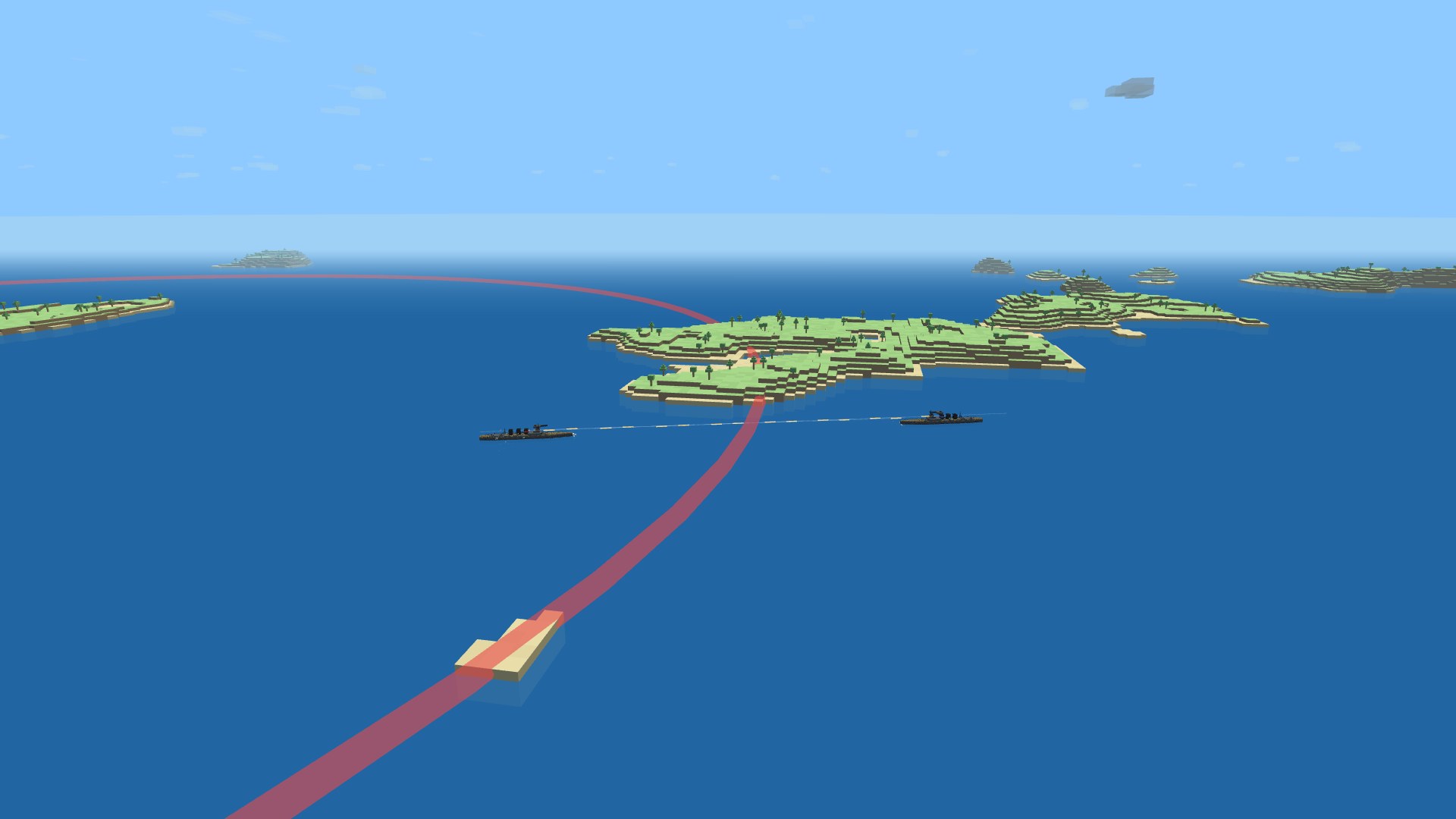
Steering around islands
The old enemy captain had one trick when a shore loomed: throw the helm hard over one way and hope. On a sea full of island chains that meant hulls grinding to a stop against beaches or sheering off into open water, miles from where they meant to go. Now the fleet looks ahead, finds the clear gap closest to where it wants to be, and threads it — picking its way through the archipelago instead of getting hung up on every rock.
Making for the cap
On top of that, the bots have an objective. A hull that isn't already holding the zone steams for it; one that holds it loiters in the ring to defend it; and an enemy in close gun range still gets a broadside. The result is that both fleets converge on the centre and the cap actually changes hands — you'll sail up to find the bots already brawling over it, and taking it from them (or holding it against them) is the game.
Tuning it surfaced a map truth: the island-dense middle is hard to push into, so the control zone is a broad central area rather than a pinpoint — big enough that the fight for the centre is the fight for the cap, islands and all. The bots use their consumables here too: repairing when they're hurt, boosting to break contact when they're not going to win the exchange.
A sea that's always fighting
The upshot: the naval war never sits idle. Whether the lobby is packed or it's just you and the bots, both fleets steam for the centre and brawl over it, the cap trading hands the whole round. Roll out into the Brick Sea and there's always a fight already underway — your job is to tip it.