Domination: three zones that split the fleet
One capture zone at the map's centre gave the naval round a place to fight over. But one zone is one fight: both fleets pile into the middle and it's a brawl with a ring around it. So the cap becomes three — a domination objective you can't hold with one massed line, and that's the whole point.
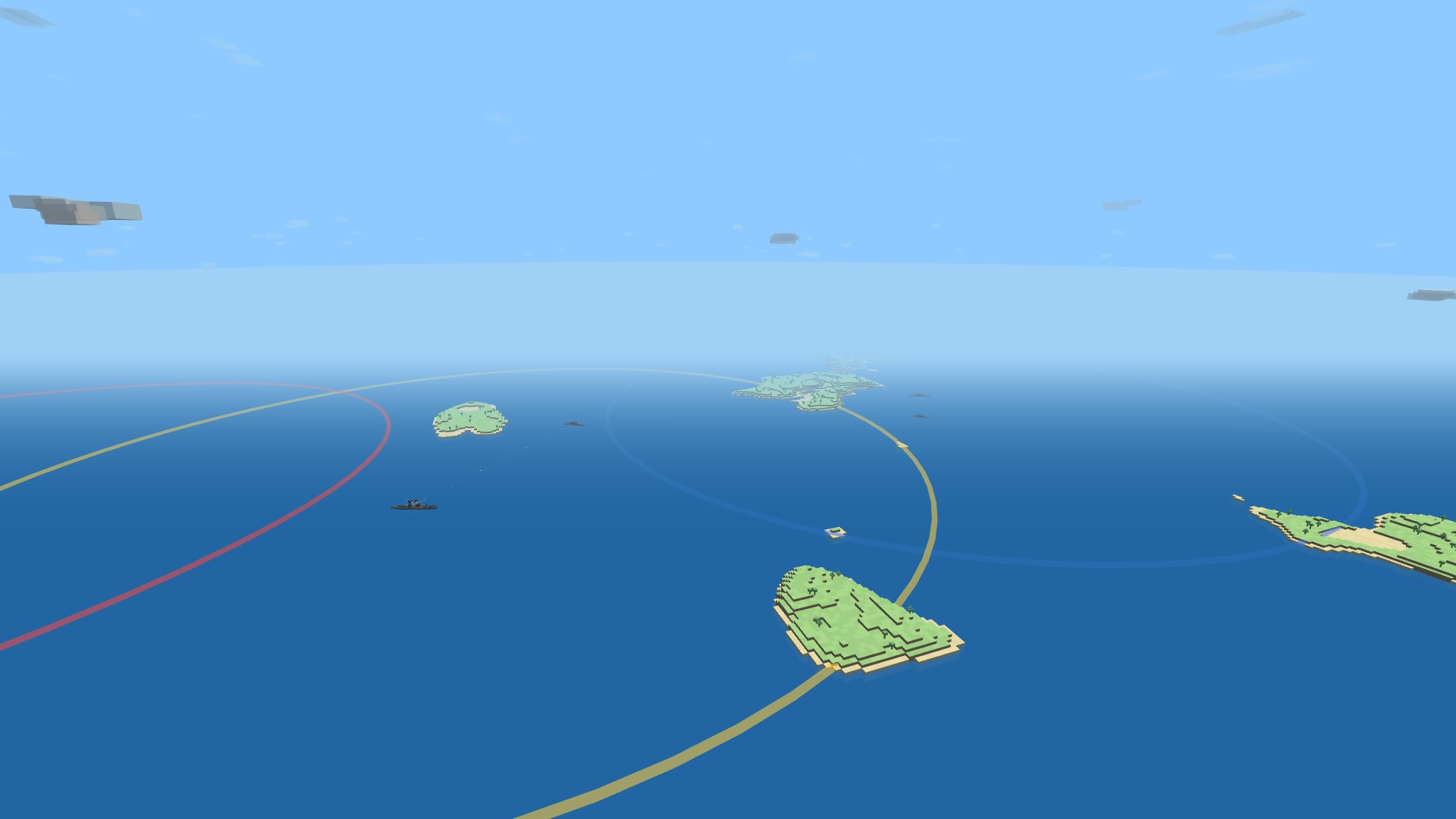
Split or lose the map
A contested zone sits at the centre, with a flank zone north and south of it. Each zone scores for whoever holds it alone, and holding more of them ticks the score faster — so you can win on map control as well as kills. The catch is that no single formation covers all three. A fleet that steams into the middle as one fist holds the centre and concedes both flanks; a fleet that scatters holds nothing for long. You have to split: send the fast hulls wide to grab and garrison the flank caps, and keep the heavies massed for the fight in the middle.
That's exactly what the AI does now. When a division forms up, the heavy line — cruisers and the battleship flagship — is assigned the contested centre, and the destroyers peel off the screen and run for the flanks, one to each, to take the cap and sit on it. It reads like real cap play: a battleship slugging it out in the middle while a destroyer races for an undefended ring on the wing, and the round can swing on whether anyone notices in time.
Why north and south
The flanks sit north and south for a reason. Crimson forms up to the west and Cobalt to the east, so strung across that line the two flank caps sit equidistant from both fleets — neither side has a shorter run to a ring, and neither can quietly own the map from the start. Put them east and west instead and whoever had the cleaner run home would lean the round their way; north–south keeps it a coin-flip.
The zones are big, too — wide enough to overlap the fight in the middle. That keeps both fleets inside a ring even as they slug it out, so the hold trades back and forth all match instead of sitting dead on the edge of the map. Every round is a real scrap for control, not a brawl with a ring around it.
Reading three at once
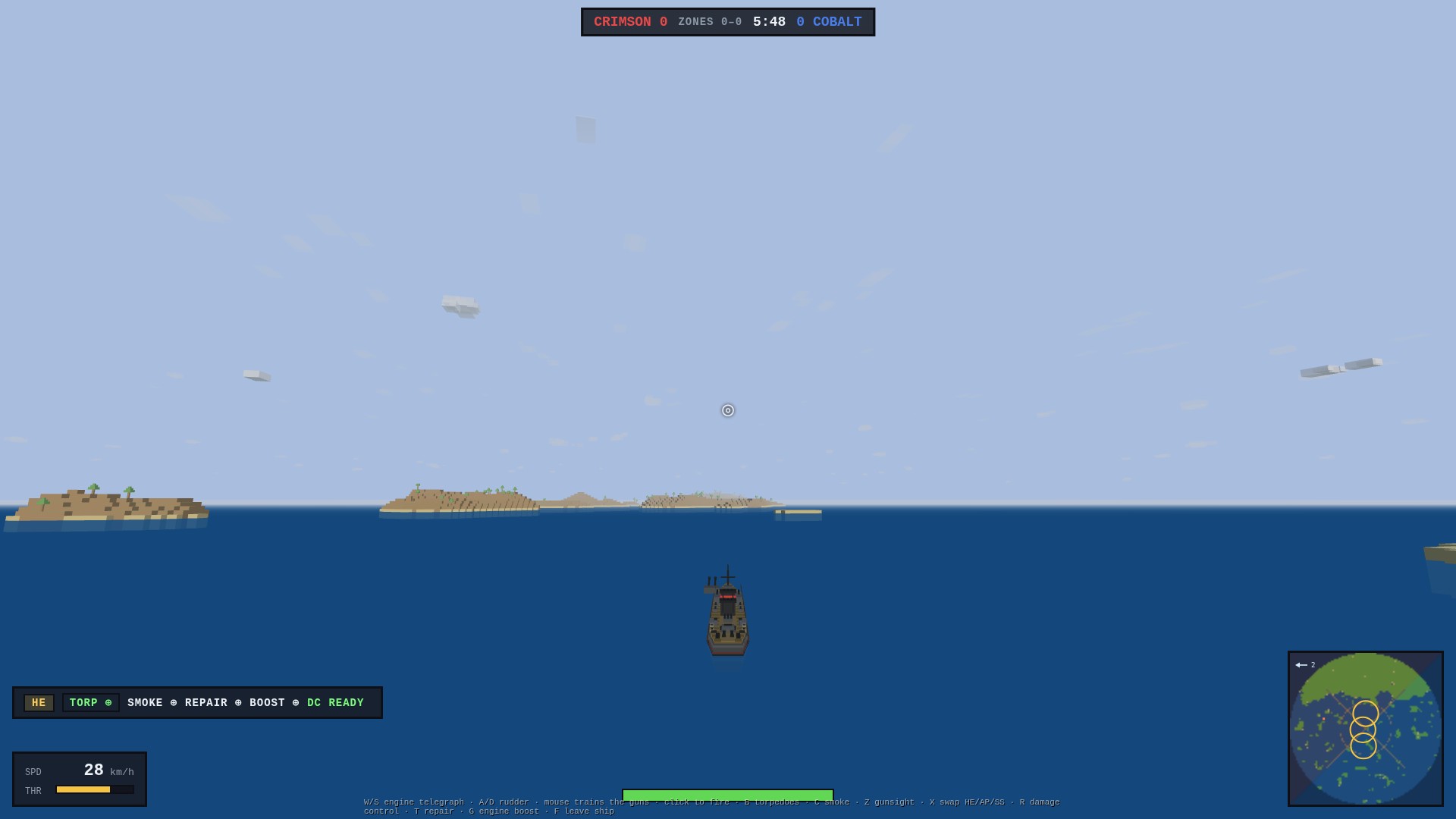
With three caps the HUD can't just say who holds “the” ring. The old ZONE: CRIMSON chip becomes a ZONES count — how many each side holds right now — and the minimap, which used to draw a single ring at the centre, now draws one ring per zone, each tinted by its holder so the whole map state reads at a glance. A callout still fires the instant any zone changes hands, so you hear a flank slipping even when your eyes are on the centre.
The rings always land on clear water, never on the rocks, spread north, centre, and south across the open sea. Hold more than the enemy and the score runs your way — so the round can turn on a lone destroyer slipping onto an undefended flank while the battle lines trade citadels in the middle.