The guns that aim themselves: secondaries and flak
A warship isn't just its main battery. Around the big turrets sit dozens of smaller guns the crew works on their own — rapid-fire secondaries for a close brawl, and anti-air flak overhead. Both now run in the naval theater, and they aim themselves.
Secondaries: the price of a knife-fight
The main battery is yours to aim. The secondary battery is not — it's a hail of small high-explosive shells the crew throws at the nearest enemy ship all by itself, the moment one sails inside range. You don't point it; you just have to be close.
That makes range the whole decision. A destroyer rushing in for a torpedo run, two cruisers circling at three kilometres, anyone caught in a brawl — the secondaries open up and start bleeding the target between main salvos, each round with a chance to light a fire. It's a hail, not a laser: every shell carries dispersion, so plenty miss at range, but up close the stream is relentless. Keeping your distance keeps you out of it; closing for the kill means eating it.
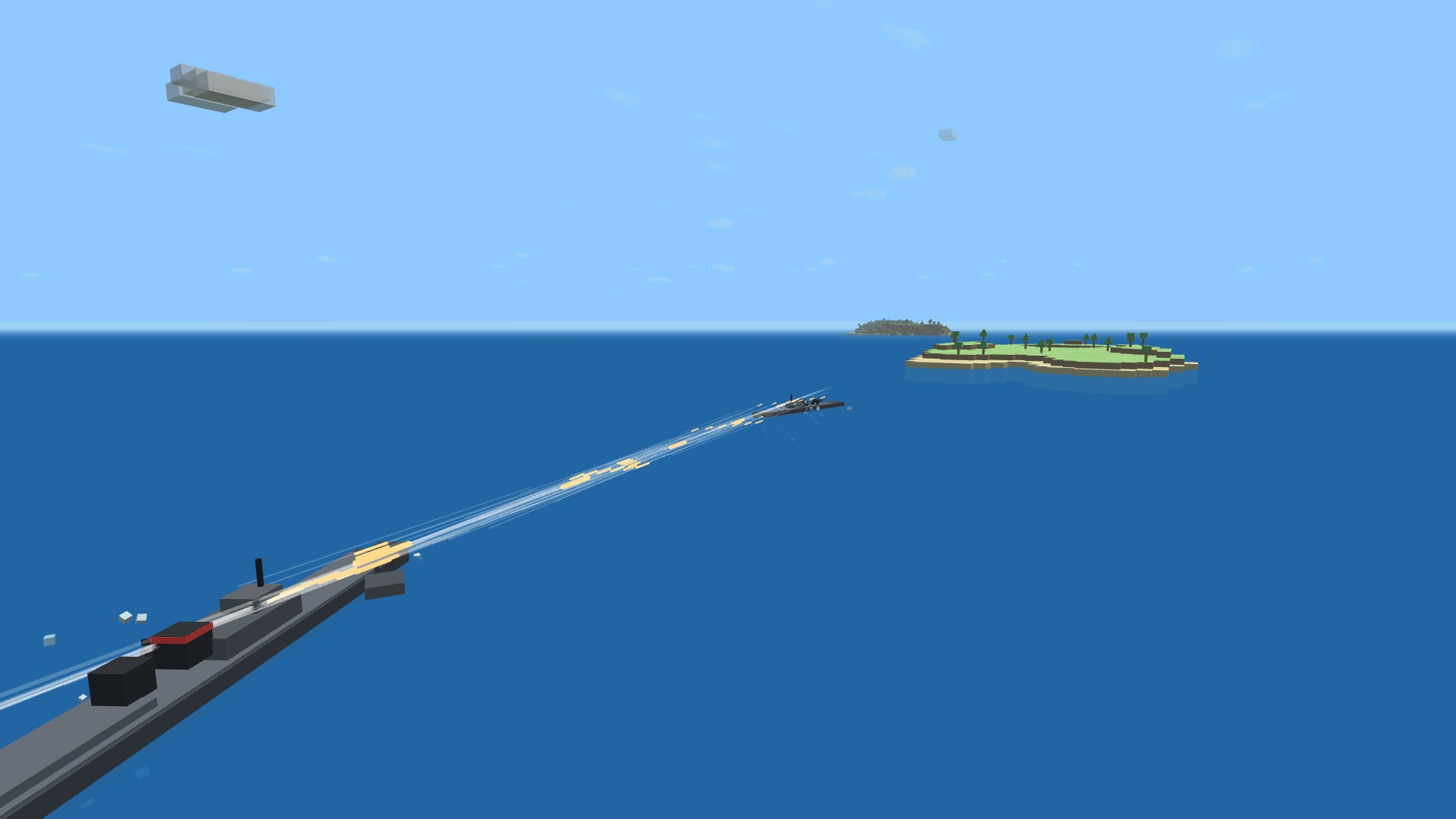
Flak overhead
Every hull that carries it now also mounts an anti-air battery — a twin flak mount that tracks and leads aircraft and throws up bursting fire overhead, the same wall of flak the shore batteries and battleships already put up. In a ship-only fight it mostly stands quiet watch, but it's up there and ready: the moment the sea war gets aircraft of its own — carrier strike planes are the obvious next step — the flak is already waiting for them.
Next stop for the sea: putting something in the air for that flak to shoot at.