Star shells and the night sea
A pass over the sea war, headlined by a new toy: the star shell. Every naval match opens in the dark, and now you can light it — loft an illuminant down your bearing and haul the enemy fleet out of the black. Along with it: a scoreboard that actually moves, a proper ship's bridge, a warship lobby, and a grounding you can back off of.
The night was the problem — so light it up
Naval battles are fought across kilometres, and every match opens at night. With no way to see that far in the dark, gunnery was guesswork. The fix isn't to cancel the night — night fighting is great — it's to give the fleets a way to see: the star shell.
A star shell is an illumination round. It climbs on a high arc and bursts near the top into a flare that floats down under its own light, casting a pool of warm glow over the sea and lifting the enemy hulls out of the black. The friendly fleet fires them on its own once it's dark, so the night battle is already lit when you sail into it — and you can answer in kind. Star shells are a third main-battery shell alongside AP and HE: cycle to SS with X and your guns loft an illuminant down their bearing, lighting up whatever you're about to fire at. Call your own light, then send the AP after it.
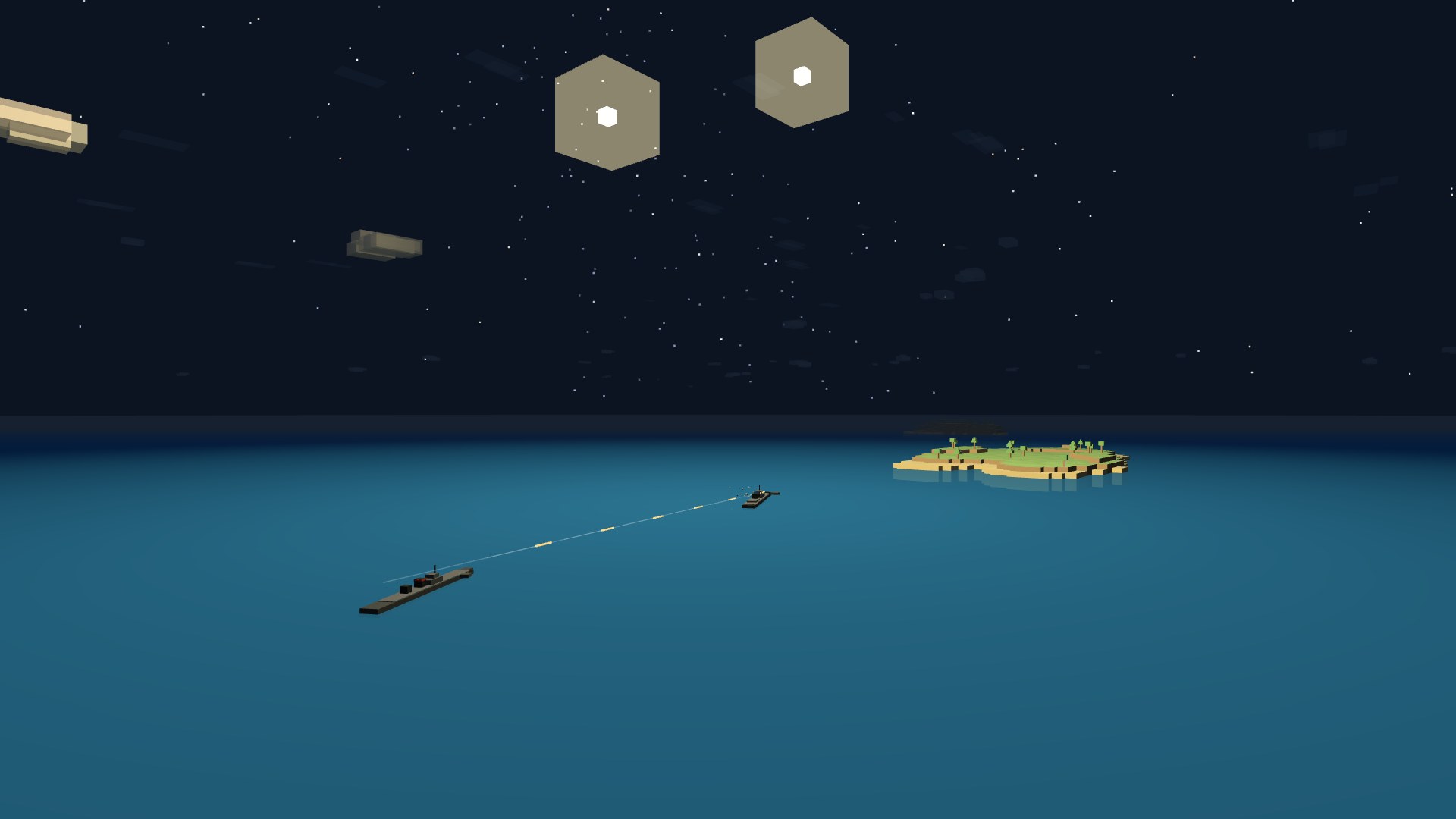
The flare is real light. It genuinely relights the hulls and the water beneath it, so a well-placed illuminant hands your gunners a target that was invisible a moment ago. The sea stays dark until someone lights it — and the captain who lights it best shoots first.
The scoreboard moves now
In a fleet action, the FLEET ACTION score used to sit at 0–0 no matter how many hulls went under. Sinkings between the fleets scored nothing, and every fire or flood that finished a hull counted for no one — the objective was dead. Now any enemy hull lost moves the score for your side. Every ship you put on the bottom counts, and the round is a real race to sink the other fleet again.
A bridge, not a cockpit
The warship display was still a plane's. It showed altitude (zero, forever — you're on the water) and a speed that read the engine order, not your actual way through the water, so a ship stuck fast on a reef cheerfully reported 63 km/h. The conning display now drops the altimeter and reads your true speed over the water — a beached hull reads what it's really doing, which is nothing. The bridge tells you the truth.
Two more rough edges
The lobby was the airfield's: it talked about dogfights and the Sky Ring, put you in a fighter by default, and offered a carrier catapult — then handed you a warship anyway. It's a proper warship lobby now: pick your hull, read your ship controls, SET SAIL. And running aground no longer welds you to the shoal for good — the hull eases astern off the shallows with a warning, so you can work free and steer clear instead of sitting there a stationary target.
The sea war is a lot closer to being its own game now: you can see the fight, the round means something, and the bridge tells you the truth.