Warships modeled on the real thing
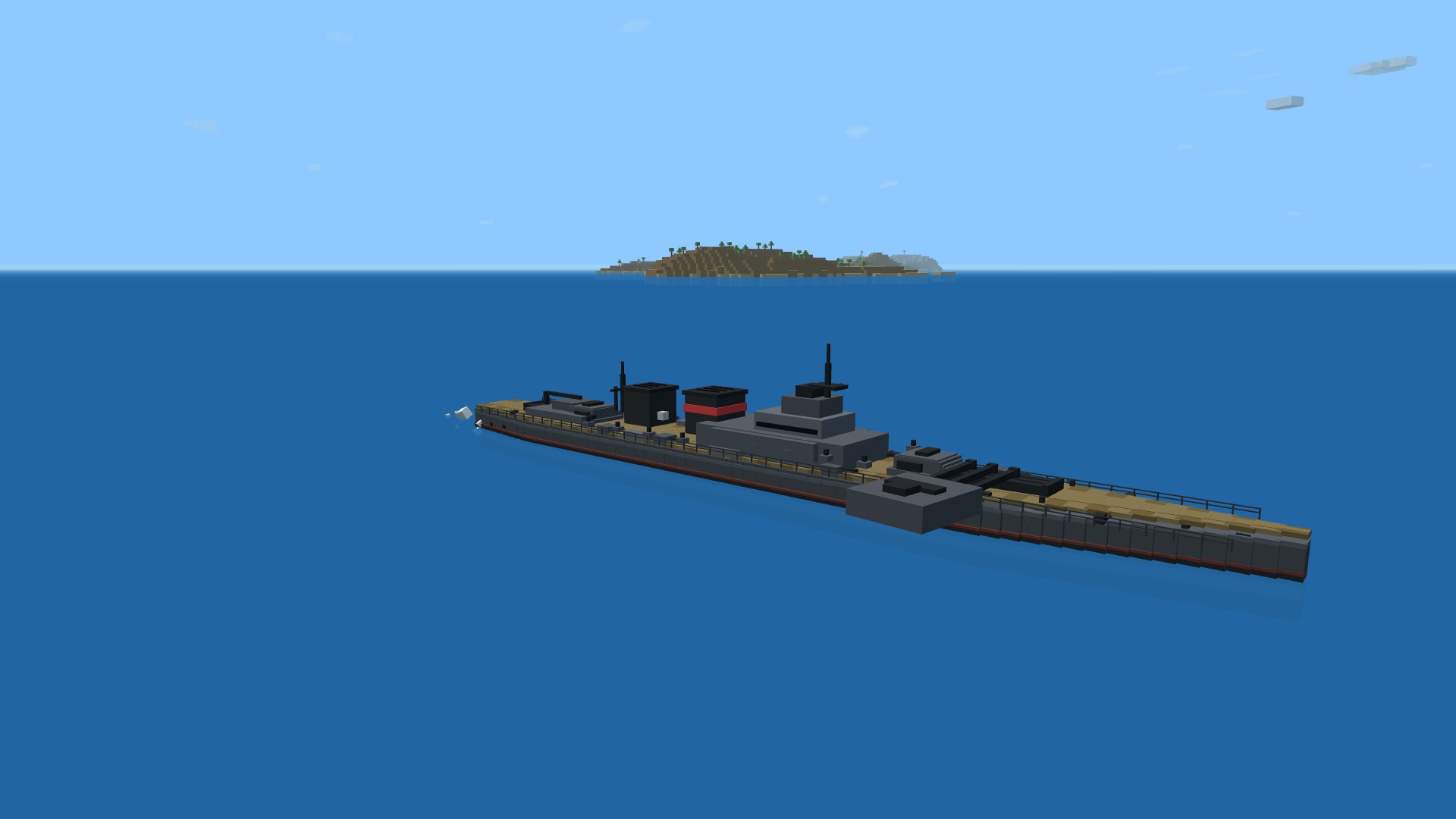
The naval hulls were blocky in the good way and blocky in the bad way. This pass keeps the chunky look but multiplies the detail roughly tenfold, and gives each class the silhouette of a real warship it's based on.
The reference ships
Every hull now nods to a specific class, so the roster reads as a real line of battle:
- The Tachi destroyer is a Fubuki/Kagerō-class Japanese destroyer — lean, two raked funnels, twin 5-inch gun houses, and the heavy centreline triple torpedo tube banks those ships were built around.
- The Bastion cruiser is a County-class Royal Navy heavy cruiser — high freeboard, three tall thin funnels, twin 8-inch turrets fore and aft, and an amidships catapult with a floatplane.
- The Dreadnought battleship is a Yamato-class — a towering pagoda superstructure, a single great raked funnel, three triple main turrets, and a forest of light AA.
- The premium Tempest stays a USS Des Moines: a flush-deck heavy cruiser with three triple autoloading 8-inch turrets and a boxy American tower.
Blocky, but a lot more of it
Every hull now has the shape of a real ship: a tapered, stepped keel that narrows toward the bow and stern, a waterline stripe, and a planked deck underfoot. Run your eye down the beam and there’s a row of portholes, railings around the deck edge, batteries of secondary and anti-air mounts, capped funnels wearing their team band, masts with their yards, and gun houses with sloped faces and stubby muzzles. Each class keeps its own distinctive bridge or pagoda so you can tell a Dreadnought from a Bastion at a glance across the water.
It’s all cosmetic — the hitboxes, the armor, and the way each ship handles are exactly as they were. Same fleet, same fight, ten times the ship to look at.